
Ceiling Repairs in Leeds & Yorkshire
From a small patch after a leak to a full ceiling reboard, Darren takes ceilings back to a clean, flat and safe finish — no mess left behind.
When you might need ceiling repairs
- ✓Water damage from a leak above
- ✓Sagging or cracked ceilings
- ✓Removing artex safely
- ✓Patch repairs after electrical or plumbing work
Common ceiling problems Darren puts right
Ceilings take a lot of punishment. Leaks from bathrooms and tanks leave stains, bulges and soft patches. Old lath and plaster ceilings can crack and sag as the plaster loses its grip on the laths. Plasterboard ceilings crack along joints that were never taped properly, and rewires, new downlights and pipe runs often leave holes behind. Each needs a slightly different fix, from a neat patch to a full replacement.
Warning signs worth taking seriously include a ceiling that has dropped or bowed, cracks that keep widening, a bulge that feels soft or damp, and plaster that sounds hollow or moves when gently pressed. A sagging ceiling can come down without much warning, so if you notice one, keep the area underneath clear and get it looked at. Darren covers Leeds and the surrounding Yorkshire towns, and quotes are free.
Patch, over-board or replace?
Small areas of damage, such as a hole after a plumbing job or a cracked section of board, can usually be cut back to sound material, filled with new plasterboard, taped and skimmed so the repair blends in. Where cracks run across the whole ceiling but it is still secure, a full skim over scrim-taped cracks often gives the best result, because patches on a ceiling tend to show when light catches them.
If the ceiling is uneven or cracked all over but firmly fixed, over-boarding with new plasterboard screwed into the joists avoids the dust and disruption of pulling the old one down. If it is sagging, soaked or coming away, the safest option is to take it down, board it fresh and skim. Darren will explain which approach suits your ceiling and why, so you can weigh up cost against the finish you want.
Artex, dust and protecting your home
Textured artex is a common reason for ceiling work. Where the artex is sound, the usual approach is to knock back the sharp peaks, seal it and skim over the top, leaving it undisturbed underneath. Older artex can contain asbestos, so it should be sampled and tested before any sanding, scraping or removal. If it does contain asbestos and has to come off, that part of the job needs an asbestos specialist before any plastering starts.
Ceiling work creates more mess than walls, because everything falls downwards. Darren clears or covers furniture, lays dust sheets across the floor and protects doorways where needed. Ceiling roses, downlights and other fittings that need taking down and refitting should be disconnected and reconnected by a qualified electrician. At the end, debris is bagged up and the room is left tidy.
What affects the cost, and aftercare
The price of a ceiling repair depends on the size of the damage, whether the ceiling can be patched, skimmed or over-boarded or needs replacing, and the height of the room. Stairwells and high ceilings may need extra access equipment. Whether artex is involved and how much furniture needs moving also play a part. There are no call-out fees, and small repairs can often be priced from a few clear photos.
After a leak, make sure it has been fixed and the joists and anything above have dried before the ceiling is closed up, or the new plaster can stain and the problem may return. New ceiling plaster dries like any skim, going from dark to an even pale pink, and needs a mist coat before painting. Any old water marks left on the surrounding ceiling are worth treating with a stain-block before decorating.
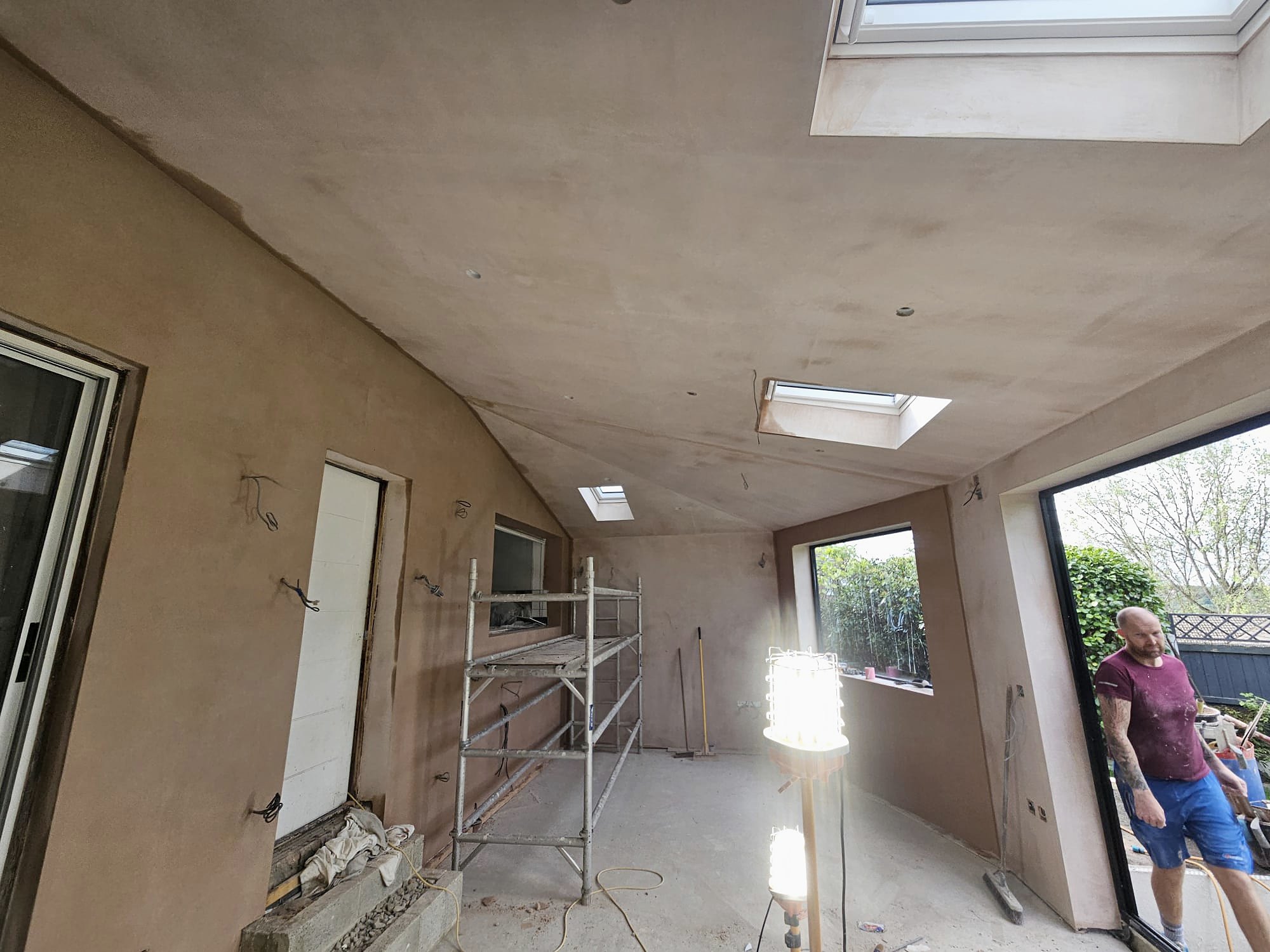
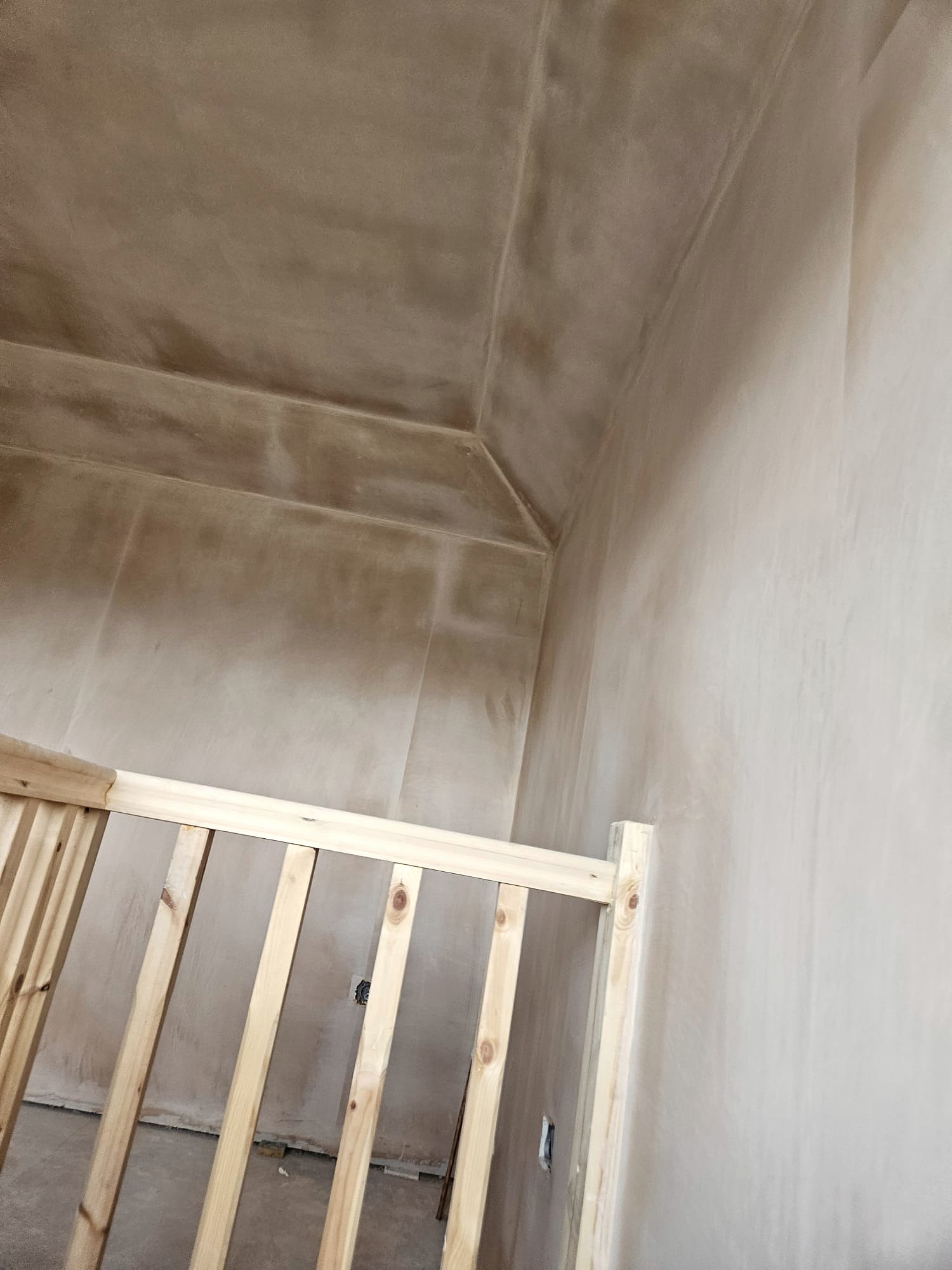
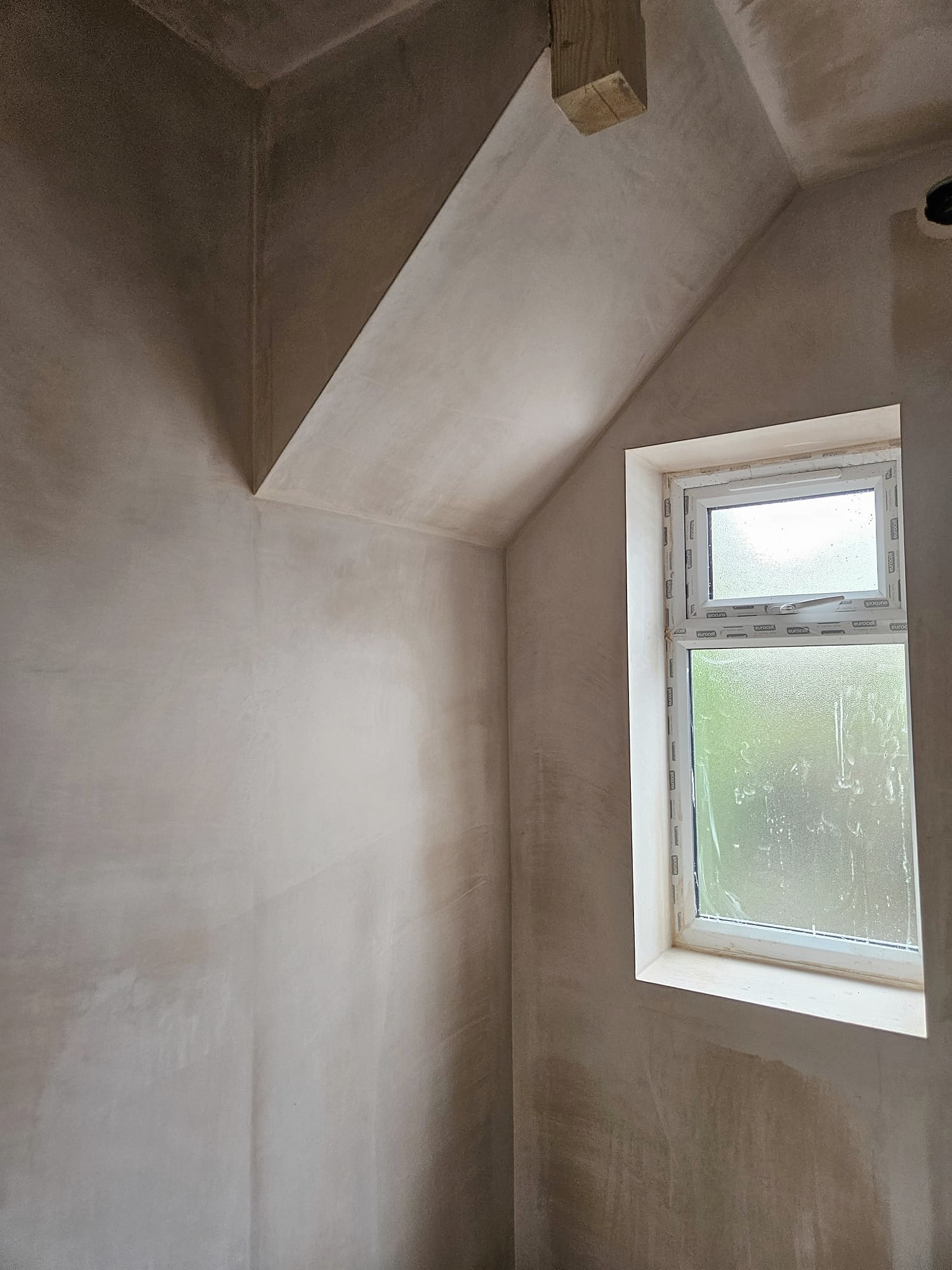
Recent work by Darren
How the job runs
- 1Inspect the ceiling, confirm any leak is fixed and agree patch, over-board or replace
- 2Room cleared or covered, floor sheeted and fittings made safe by an electrician
- 3Damaged areas cut back, or the old ceiling taken down or over-boarded
- 4Joints and cracks scrim-taped, then the ceiling skimmed
- 5Debris bagged, room tidied and drying advice given
FAQs
+Can a cracked ceiling be repaired without replacing it?
Usually, yes. If the ceiling is still firmly fixed, cracks can be raked out, filled and scrim-taped, then the whole ceiling skimmed so they do not show. Replacement is only needed if the ceiling is sagging, soaked or coming away from the joists. Darren will check how secure it is before recommending anything.
+Is a sagging ceiling dangerous?
It can be. A ceiling that has dropped or bowed has lost some of its fixing, and old lath and plaster ceilings in particular can come down with little warning. Keep people out of the area underneath, avoid pushing on it, and get it looked at by a plasterer or builder as soon as you can.
+How do you fix a ceiling after a water leak?
First the leak has to be fixed and the area left to dry out. Then any damaged plaster or board is cut back to sound material, replaced with new plasterboard, taped and skimmed. If the ceiling is stained but still sound, it may only need sealing and redecorating. Darren will tell you which it is once he has seen it.
+Is it better to over-board or replace a ceiling?
Over-boarding is quicker, cleaner and usually cheaper, and works well when the old ceiling is uneven or cracked but still secure. Replacing is the right call when the ceiling is sagging or badly water damaged, or when you need access to the joists or services above. Both finish with a skim coat.
+Do I need to test my artex ceiling for asbestos?
If the artex is older, it is sensible. Some textured coatings from past decades contain asbestos, and a sample can be tested by an accredited lab. If the ceiling is sound, skimming over it avoids disturbing it. If it has to come off, removal should be handled by an asbestos specialist before any plastering.