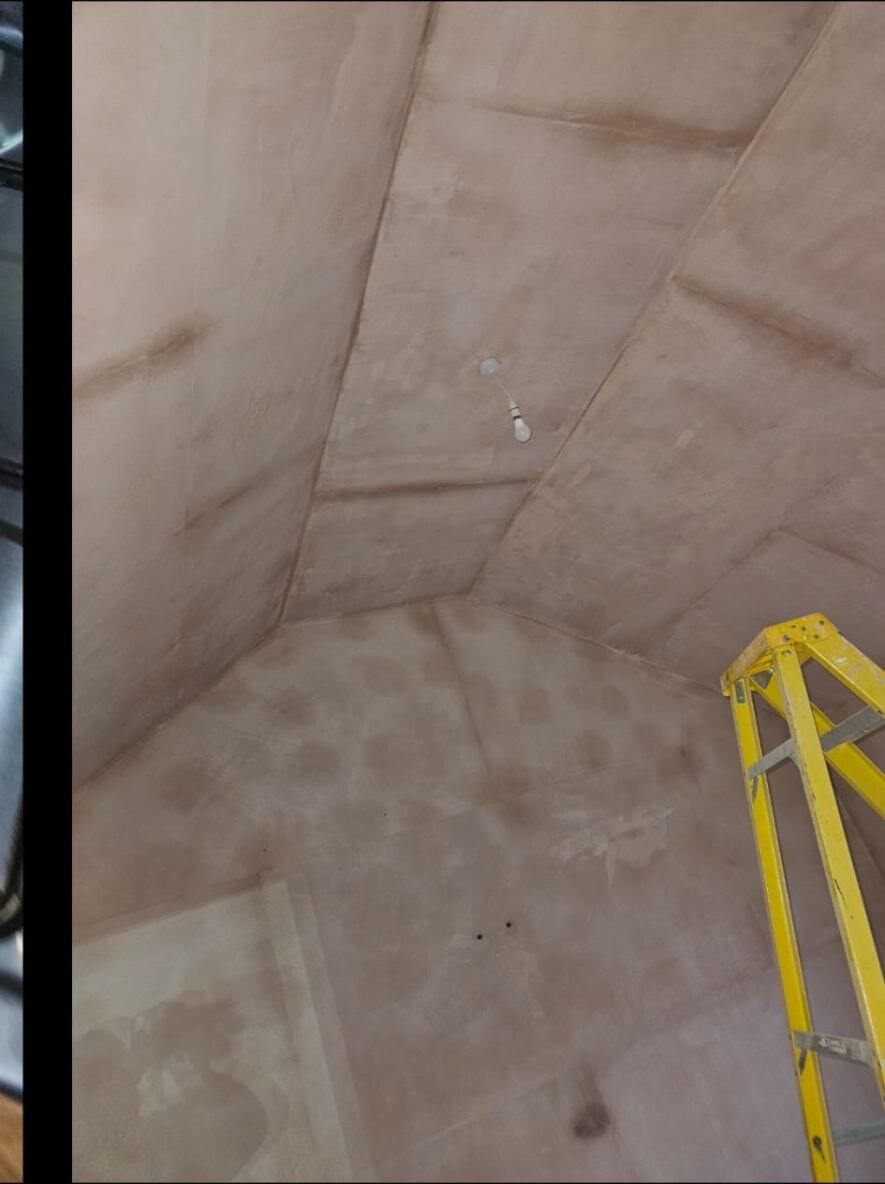
Coving in Leeds & Yorkshire
Coving hides the wall-to-ceiling joint and adds a clean, finished look. Supplied and fitted in a range of profiles to suit traditional or modern interiors.
When you might need coving
- ✓Finishing a freshly plastered room
- ✓Hiding cracks at the wall/ceiling joint
- ✓Adding character to plain rooms
- ✓Replacing damaged or removed coving
Why fit coving
Coving runs along the joint where the walls meet the ceiling. Practically, it covers a line that is prone to cracking as the house moves with the seasons, and it hides slightly wavy junctions that are hard to get perfectly straight with plaster alone. Visually, it frames the ceiling and makes a room look finished. A simple modern profile keeps things clean, while a deeper, more decorative profile suits period rooms and higher ceilings.
Common reasons to fit coving include finishing a room that has just been plastered, covering a crack that keeps coming back at the top of the wall, replacing coving damaged during other work, and adding a bit of character to a plain room. If you already have coving in other rooms, matching the profile keeps the house consistent, so a photo of the existing coving is useful when you ask for a quote.
Materials and choosing a profile
The most common type is gypsum coving, a plaster core with a paper facing, which comes in a range of standard sizes and takes paint well. Polyurethane and other lightweight mouldings offer more ornate profiles without the weight. Traditional fibrous plaster cornice is heavier and more specialist. Darren will talk you through what suits the room, the ceiling height and your budget before supplying and fitting it.
Size matters more than people expect. Coving that is too small looks lost in a large, high room, while a deep profile can overpower a small bedroom with a low ceiling. As a rough guide, bigger rooms with taller ceilings can carry a deeper profile. Looking at a couple of options against your own walls before choosing helps you picture the finished room.
How coving is fitted
Good coving comes down to accurate cutting and a solid fix. Straight guide lines are marked on the walls and ceiling, and loose paint or wallpaper in the fixing area is scraped back so the adhesive bonds to a sound surface. Internal and external corners are mitred so the lengths meet tightly. Each length is bedded in coving adhesive and supported with temporary pins while it sets.
Once fixed, joints and mitres are filled, excess adhesive is cleaned off, and the top and bottom edges are finished so there are no gaps along the wall or ceiling. On a freshly plastered room, coving usually goes up once the plaster is dry enough, and on existing walls it can go up before redecorating. Floors and furniture are protected throughout, and the room is left tidy.
Price and decorating
The cost of coving depends on the length of wall to cover, the profile and material, the number of corners and chimney breasts, and the condition of the walls and ceiling. Rooms with bay windows, alcoves and lots of short returns take longer than a simple square room. Quotes are free across Leeds and Yorkshire, with no call-out fees. Once the adhesive and filler are dry, the coving is ready to paint.
If the room is freshly plastered, the coving can be mist-coated and painted along with the walls and ceiling once everything is dry. Running a fine bead of decorator's caulk along any hairline gaps before the final coat gives a crisp line where the coving meets the wall and ceiling. Gypsum coving takes ordinary emulsion, so no special paint is needed.
How the job runs
- 1Measure the room and agree the profile and material
- 2Room protected and fixing areas prepared
- 3Guide lines marked, then lengths and corners cut to fit
- 4Coving bedded in adhesive and supported while it sets
- 5Joints and edges filled and cleaned off, ready to paint
FAQs
+Does coving hide cracks between the wall and ceiling?
Yes, this is one of the main reasons people fit it. The wall-to-ceiling joint moves slightly with the seasons and often cracks, even on good plaster. Coving bridges the joint and covers the line. Any loose material is removed first so the coving is fixed to a sound surface.
+Can coving be fitted to uneven walls?
Yes. Small gaps along the top and bottom edges are filled once the coving is fixed. If the walls or ceiling are badly out of line, some preparation or a skim first may give a better result. Darren will point out anything that could affect the finish when he quotes.
+Should coving go up before or after plastering?
Usually after. If a room is being skimmed, the plaster goes on first and the coving is fitted once it is dry enough, then everything is decorated together. In a room that is not being plastered, coving can be fitted to the existing walls and ceiling before redecorating.
+What is the difference between coving and cornice?
The terms are often used interchangeably. Coving usually means a plain, curved profile, while cornice tends to describe more decorative mouldings, often found in period homes. Both sit at the wall-to-ceiling joint and do the same job. Darren can advise on which style suits your room.
+When can you paint new coving?
Once the adhesive and filler have fully set, which is usually within a day or so depending on the product and room temperature. Gypsum coving takes emulsion well. Many people paint it the same colour as the ceiling, while others pick it out in white or a contrasting shade.