
Skimming in Leeds & Yorkshire
Skimming is the thin top coat of plaster that gives walls and ceilings a perfectly smooth, paint-ready finish. It's the difference between a tired room and a sharp, modern one.
When you might need skimming
- ✓Old artex or textured ceilings you want flattened
- ✓Tired walls with hairline cracks, fillers and patches
- ✓Newly boarded rooms ready for a finish coat
- ✓Refreshing a room before redecorating
What a skim coat involves
A skim is a thin finishing coat of plaster, usually around 2 to 3mm of multi-finish, applied in two passes over a sound surface. Darren lays on the first coat, lets it pick up, then applies the second and trowels it up as it firms until the surface is flat and polished. Done well, you get a wall or ceiling with no ripples, trowel marks or ridges, ready for a mist coat and paint.
Skimming works over existing plaster that is still well bonded, over new plasterboard, and over sound artex once it has been prepared. It is not a fix for plaster that has blown away from the wall or gone soft with damp. Before quoting, Darren taps round the walls to check for hollow areas, because skimming over loose plaster only hides a problem that will crack or bulge later.
How Darren prepares and protects the room
Most of the work in a good skim happens before any plaster goes on. Dust sheets go down, anything staying in the room is covered, and sockets and switches are masked. Loose paint and flaking areas are scraped back, cracks are raked out and filled, and scrim tape goes over any that are likely to reappear. Metal angle beads can be fitted to tired external corners to give crisp, straight edges.
The surface is then treated to control suction. On painted or smooth walls that usually means a bonding agent or PVA mix, so the new plaster grips properly and does not dry too fast. On artex, the sharp peaks are knocked back and the texture is sealed first. Older artex can contain asbestos, so it is worth having a sample tested before anyone sands or scrapes it. Skimming over sound artex avoids disturbing it.
What affects the price of skimming
Every skimming quote depends on the room. The main factors are the area of walls and ceiling, the height and access (stairwells and high ceilings need platforms or towers), and how much preparation the surface needs. A room with sound, clean walls costs less than one with flaking paint, lots of old filler, wallpaper to strip or textured artex to flatten. Ceilings take longer than walls, and full rooms take longer to protect.
Darren gives free quotes across Leeds and Yorkshire with no call-out fees, usually after a quick look at the job, and for smaller jobs a few clear photos can be enough to start with. He will tell you plainly whether a skim will do or whether some areas need a backing coat first, so there are no surprises halfway through. If several rooms need doing, it often makes sense to plaster them in one go.
Drying and decorating afterwards
Fresh skim starts dark and patchy and turns an even light pink as it dries. In a normal, heated home that commonly takes several days, though cold rooms, high humidity or skimming over a new backing coat can stretch it out. Keep the room ventilated with a window open a little and gentle background heat, and avoid putting fan heaters or dehumidifiers right up against the new plaster, which can cause cracking.
Once it is dry, the first coat of paint should be a mist coat: a breathable matt emulsion watered down so it soaks into the plaster and gives the top coats something to key to. Avoid vinyl or wipeable paints for this first coat, as they sit on the surface and can peel. Any small nibs can be taken off with a light rub of fine sandpaper, then decorate as normal.
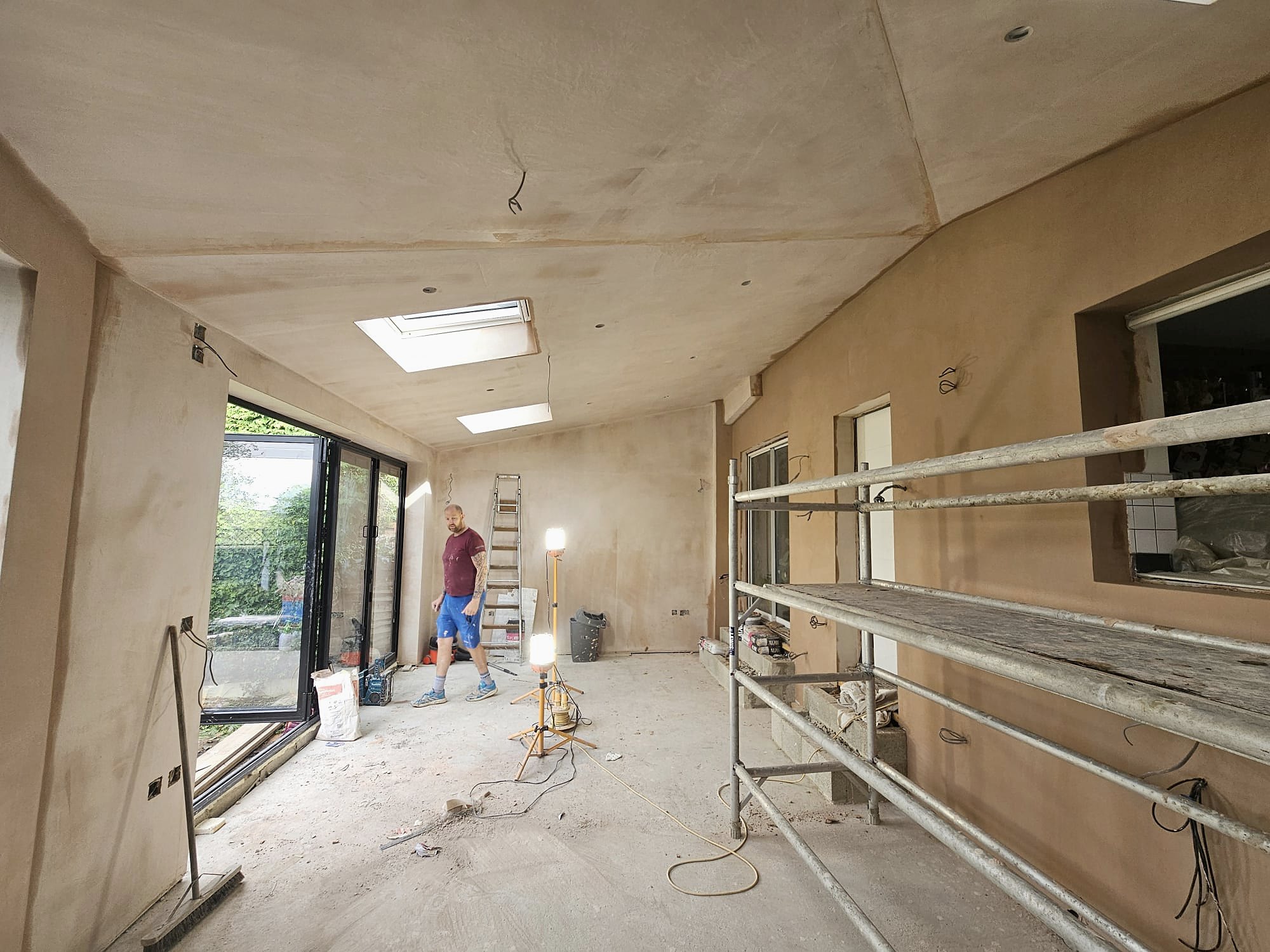
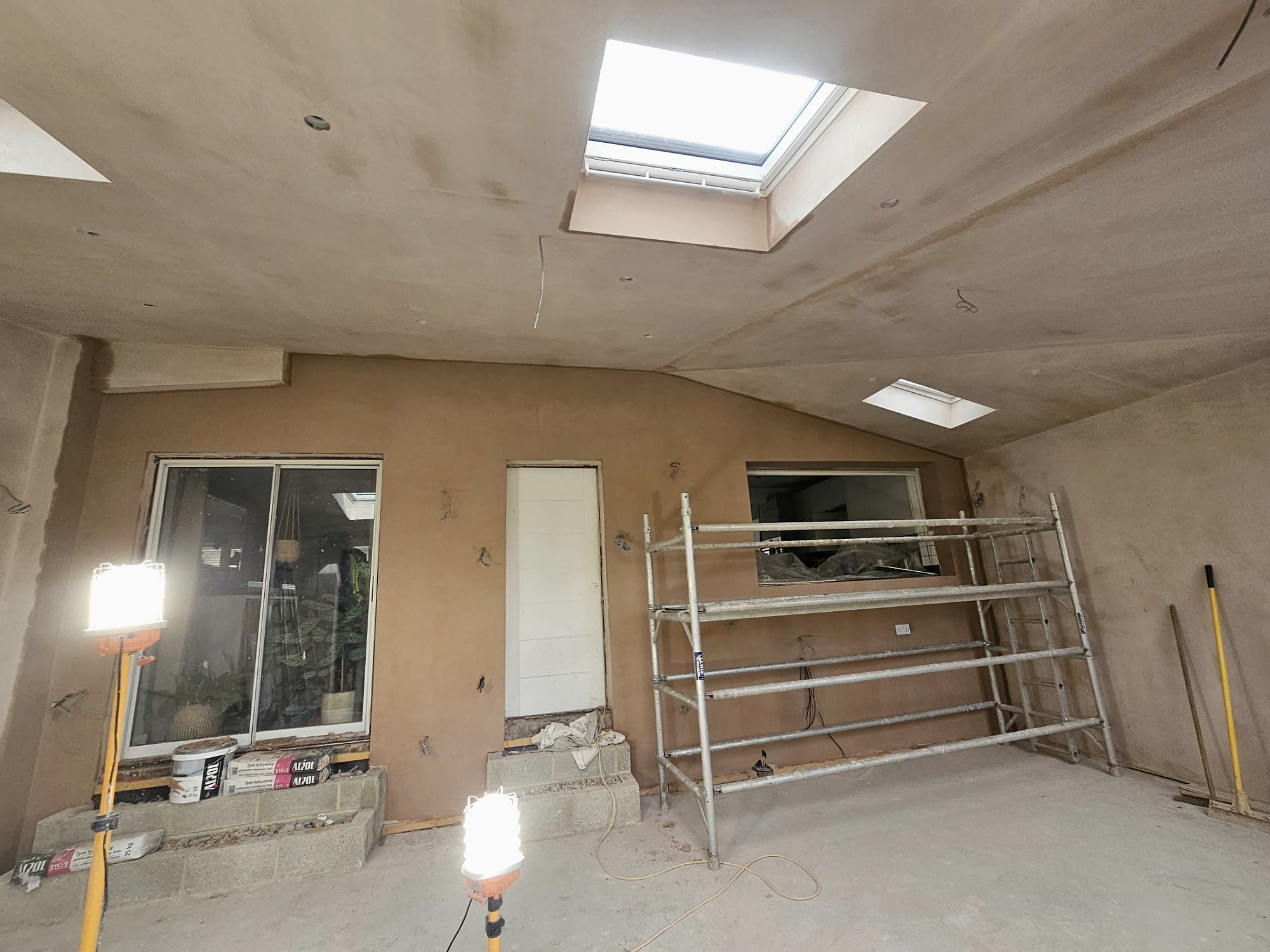
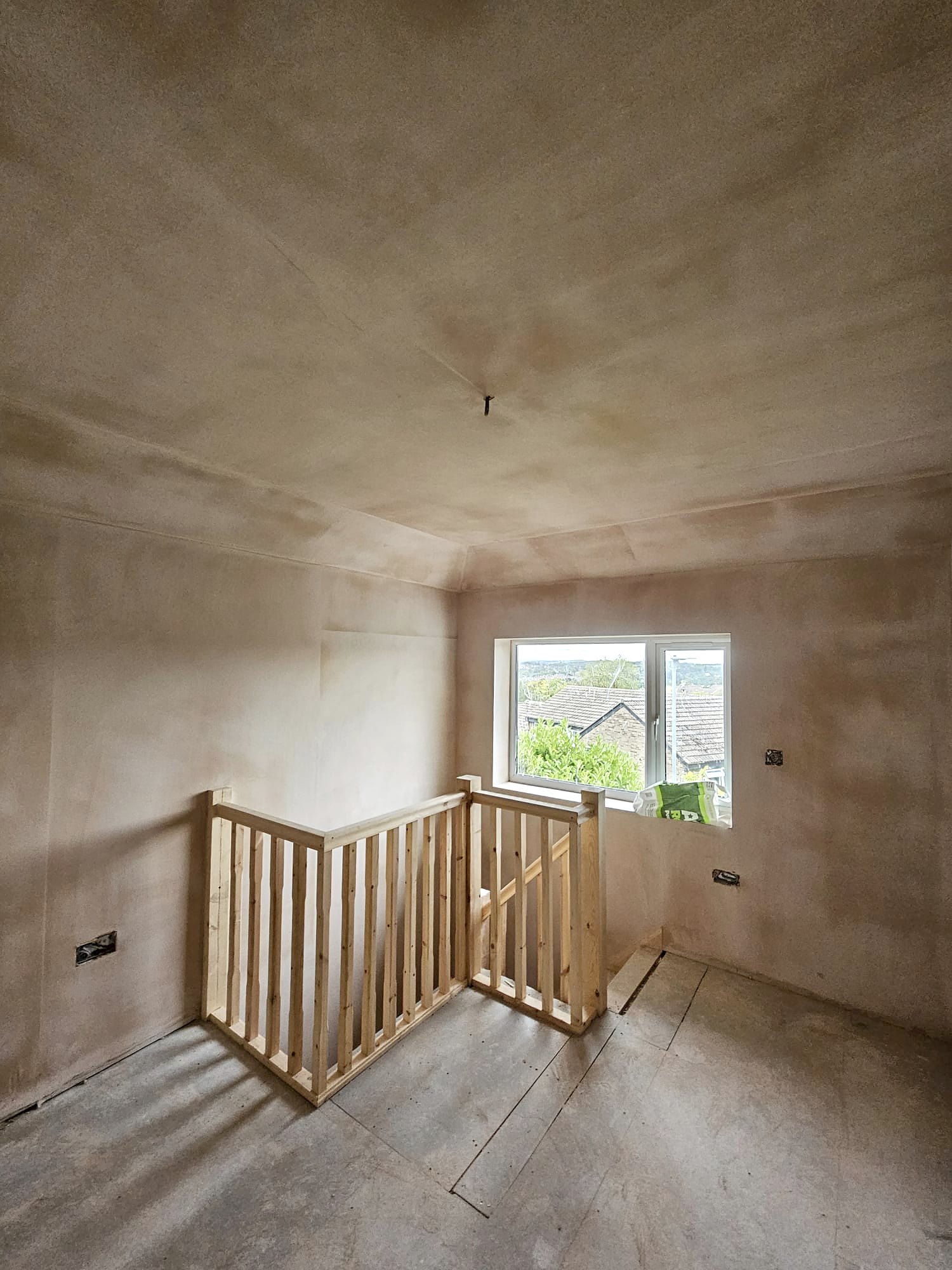
Recent work by Darren
How the job runs
- 1Free look at the job (or photos) to check the walls are sound and agree the scope
- 2Room protected with dust sheets, and sockets and switches masked
- 3Cracks filled, beads and scrim fitted, surface sealed with a bonding coat
- 4Two coats of multi-finish applied and trowelled to a smooth, flat finish
- 5Tidy-up and advice on drying, ventilation and the mist coat
FAQs
+Can you skim over artex?
Yes, in most cases. If the artex is firmly stuck, Darren knocks back the sharp peaks, seals it with a bonding coat and skims over the top, which avoids disturbing it. Older artex can contain asbestos, so if your ceiling has been up for decades it is sensible to get it tested before any sanding or scraping.
+How long does a skim coat take to dry before painting?
Commonly several days in a warm, ventilated room, and longer in cold or damp conditions or over a fresh backing coat. Wait until it has turned an even light pink with no dark patches, then apply a mist coat first. Painting too early traps moisture and can lead to peeling.
+Can you skim over painted walls?
Usually, yes, as long as the paint is sound and not flaking. Darren scrapes back any loose areas and applies a bonding agent so the new plaster grips the painted surface and does not dry too quickly. Walls with silk or vinyl paint, or many layers of old paint, may need extra preparation, which he will flag when he quotes.
+Is it better to skim or re-plaster a wall?
If the existing plaster is solid and just tired or cracked, a skim is quicker and cheaper. If it sounds hollow when tapped, is crumbling or has been damaged by damp, those areas need taking back and re-plastering with a backing coat before the skim. Darren will tell you which your walls need rather than guessing.
+Can you skim a ceiling without taking it down?
Yes, if the ceiling is sound. Plasterboard and firmly bonded older ceilings can often be skimmed directly after preparation. If the ceiling is sagging, badly cracked or coming away from the joists, it is better to over-board or replace it first, then skim, so the new finish is not sitting on something that could fail.