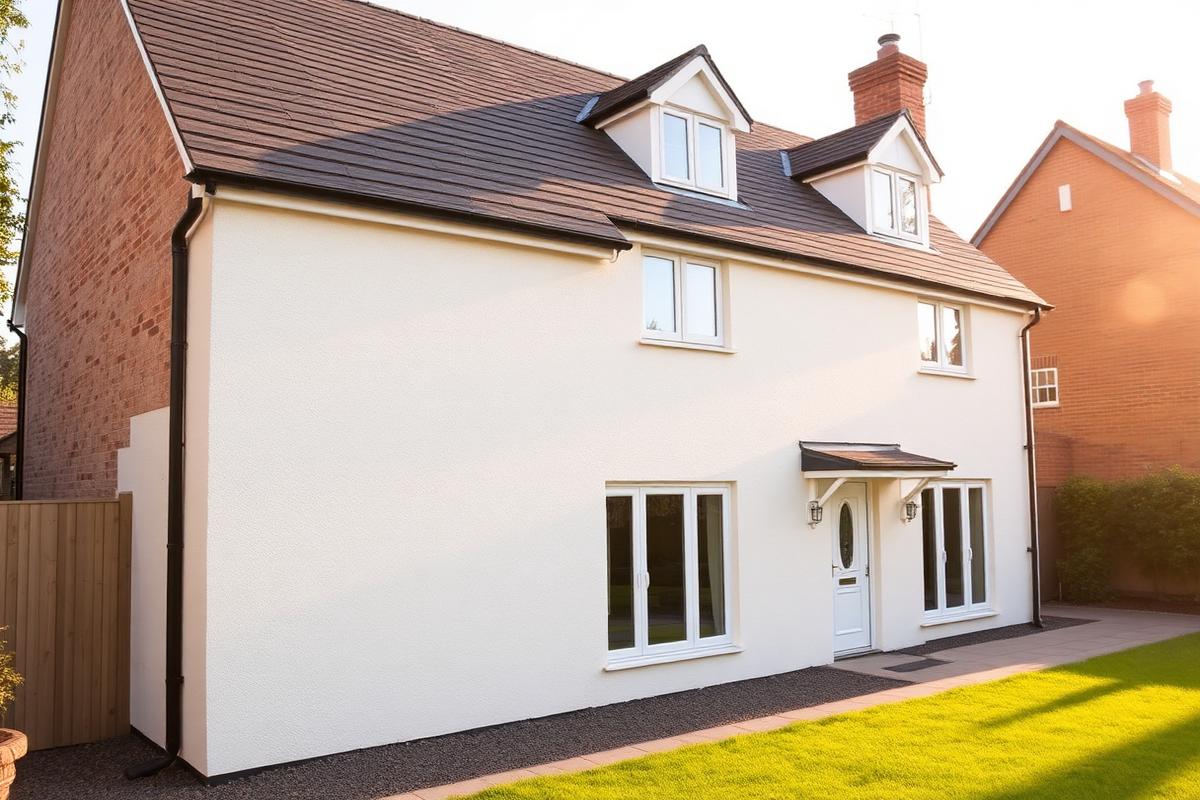
Rendering in Leeds & Yorkshire
External rendering protects your home from the British weather and dramatically lifts kerb appeal. Available in sand & cement, monocouche and modern silicone systems.
When you might need rendering
- ✓Cracked, blown or stained existing render
- ✓New extensions needing a full external finish
- ✓Modernising a tired brick or pebble-dash exterior
- ✓Improving weather-proofing and insulation
Choosing the right render system
Traditional sand and cement render is applied in coats: a scratch coat keyed into the wall, then a finishing coat that can be floated smooth or given a texture. It is hard wearing and suits most brick and block walls, but it is normally painted with masonry paint afterwards and will need repainting over the years. It remains a sensible choice where budget matters or where new render has to match existing work.
Monocouche is a through-coloured, cement-based render usually applied as one thick layer and scraped back to an even textured finish, so it does not need painting. Silicone renders are thin-coat systems applied over a base coat with reinforcing mesh, and are known for being water repellent and resisting dirt and algae. Darren will talk you through which suits your walls, the look you want and how much upkeep you are happy with.
Preparing the walls and planning the job
Good render starts with good preparation. Loose or blown render is hacked off, and the wall underneath is checked, cleaned and treated so the new coats bond. Beads are fitted to corners, window and door reveals and along the bottom edge, with a bell cast bead set above the damp proof course so the render does not bridge it. Windows, doors, paths and plants are covered to keep them clean.
Many rendering jobs need scaffolding to reach the full height of the wall safely, and that is one of the biggest factors in the overall cost, along with the wall area, the system chosen and how much old render has to come off. Weather matters too. Render should not go on in frost, heavy rain or strong direct sun, so jobs in Leeds and across Yorkshire are planned around the forecast and can move if conditions turn.
Signs your render needs attention
Cracks, patches that sound hollow when tapped, bulges and pieces falling away all show that render has lost its bond with the wall. Once water gets behind it, freezing and thawing through the winter tends to make the damage spread. Staining, green algae and faded, patchy paint are more cosmetic but can point to render that is holding moisture. Small areas can often be cut out and patched, but widespread cracking usually means stripping back and starting again.
Rendering is also a popular way to modernise tired brick, dated pebble-dash or a mismatched extension, giving the house one clean, uniform finish. On a new extension it is often part of the original plan, finished to match or contrast with the main house. If you are also considering external wall insulation, that is a specific system with its own requirements, so it is worth raising at the quote stage so everyone is clear on what is included.
Curing and aftercare
Render takes longer to cure than internal plaster, especially in cold or damp weather, and it should be left alone while it hardens. Sand and cement render must be fully dry before it is painted, and a breathable masonry paint is the right choice. Monocouche and silicone finishes carry their colour in the material, so they do not need painting. Keep hoses, pressure washers and ladders off fresh render until it has properly set.
Once cured, render needs little upkeep, but it pays to keep an eye on it. Keep gutters and downpipes clear so water is not running down the face of the wall, trim back plants that hold moisture against it, and deal with small cracks early before water gets in behind. Painted sand and cement render will need a fresh coat of masonry paint from time to time to keep it looking sharp.
How the job runs
- 1Site visit to check the walls, access and whether scaffolding is needed
- 2Old or blown render removed and the wall cleaned and treated
- 3Beads fitted to corners, reveals and above the damp proof course
- 4Base and finish coats applied in suitable weather
- 5Protection removed, site cleared and aftercare explained
FAQs
+What is the best type of render for a house?
There is no single best option. Sand and cement is hard wearing and economical but usually needs painting. Monocouche is through-coloured and needs no paint. Silicone thin-coat systems are water repellent and good at resisting dirt and algae. The right choice depends on your walls, the look you want, your budget and how much maintenance you want to do.
+Can you render over pebble dash?
Often, yes, if the pebble-dash is firmly bonded. Loose areas are removed, the surface is prepared so the new render grips, and it is then rendered over to give a smoother, modern finish. If large areas are hollow or coming away, it is better to remove it first. Darren will check it on site before recommending an approach.
+Do you need scaffolding to render a house?
For most full elevations, yes. Rendering needs a safe, stable working platform at every height of the wall, and ladders are not suitable. Scaffolding is one of the bigger variables in the price, so it will be discussed at the quote stage. Small, low areas such as a garden wall or a ground-floor patch can sometimes be done without it.
+Can you render in winter?
Render should not be applied in frost, or when frost is expected before it has set, and heavy rain can wash out a fresh coat. Mild, dry spells in winter can still work, but rendering jobs are planned around the forecast, so start dates may move if the weather turns.
+Does rendering stop damp?
Sound render helps keep driving rain out of the walls, but it is not a damp-proof treatment and will not cure rising damp or leaks. Cracked render can actually trap water, which is why repairs matter. If you have damp inside, the cause should be found and fixed first, and render must finish above the damp proof course so it does not bridge it.