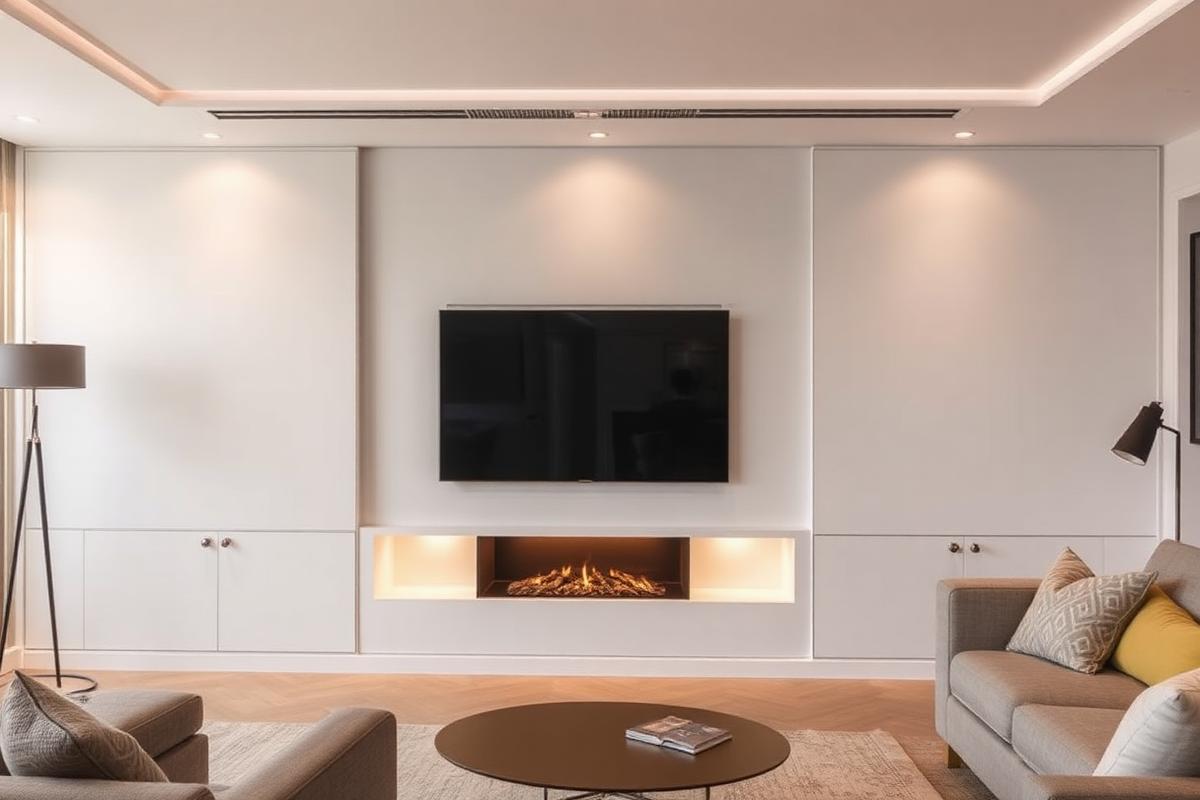
Media Wall Plastering in Leeds & Yorkshire
Media walls are one of the most popular upgrades right now. Darren plasters the boarded structure to a perfectly flat, sharp-cornered finish ready for paint, paper or stone.
When you might need media wall plastering
- ✓New media wall builds in lounges
- ✓Recessed electric fireplaces and TV alcoves
- ✓Boxed-in feature walls and shelving
- ✓Upgrading a basic wall into a feature
What Darren does on a media wall
A media wall is usually a timber or metal frame built out from an existing wall, clad in plasterboard, with recesses for the TV, an electric fire and shelving. Darren's part is to take that boarded structure and plaster it to a crisp, flat, paint-ready finish. Whoever builds the frame, whether that is a joiner, a builder or you, sets the shape. The plastering is what makes it look like part of the house.
The work involves fitting metal angle beads to every external corner and recess edge, scrim-taping all board joints and skimming the faces and reveals. Recesses are where the skill shows. Each reveal has to be straight and consistent in width, each corner sharp and square, and the back of every niche flat, because LED strips and uplighters will pick out any wave or ripple in the finish.
Getting the build right before plastering
A lot of media wall problems start before the plasterer arrives. Cables for the TV, soundbar and lighting, sockets and the fire's power supply should all be in place before boarding, installed by a qualified electrician, as chasing them in afterwards risks cracks. The fire manufacturer's guidance on recess size and clearances needs following, and the frame should be plumb, square and solidly fixed, with extra timber behind where the TV bracket will go.
If you are still at the planning stage, Darren can look over the design when he quotes and flag anything that could make the plastering awkward, such as very narrow recesses that are hard to get a trowel into. Where the frame is already built, he can board it as well as skim it if that suits the job. The media wall guide on this site covers the planning side in more detail.
Price, protection and finishing
The price of plastering a media wall depends on its size, how many recesses and shelves it has, the number of external corners to bead, and whether Darren is boarding as well as skimming. A simple TV recess above a fire takes far less time than a full-width wall with alcove shelving and lighting channels. Quotes are free with no call-out fees across Leeds and Yorkshire, and a photo or drawing of the design helps.
Because a media wall usually sits in a finished lounge, protection matters. Floors are sheeted, furniture moved or covered, and the fire unit and any fitted lighting masked off. Once skimmed, the wall needs to dry fully, then a mist coat before top coats, and a deep matt finish hides far more than sheen. If stone or tile cladding is planned, agree with your tiler beforehand which areas should be skimmed and which left as bare board.
How the job runs
- 1Look at the frame or plans and confirm exactly what is being plastered
- 2Room protected and the fire unit, lighting and sockets masked off
- 3Angle beads fitted to every corner and recess, joints scrim-taped
- 4Faces and reveals skimmed to sharp, straight, flat lines
- 5Tidy-up, with drying and decorating advice
FAQs
+Does a media wall need plastering?
Not always, as some boarded walls are taped and jointed instead. But a skim gives a harder, smoother surface with sharper corners, and it hides board joints and screw heads under the lighting most media walls use. For a showroom-style finish, a skim over beaded corners is the usual choice.
+Can you plaster a media wall someone else has built?
Yes, that is the usual arrangement. The frame needs to be solid, square and plumb, with boards properly fixed and all cables in place. Darren will check the build before starting and flag anything that would show through the finish, so it can be put right before the plaster goes on.
+How long does a media wall take to dry before painting?
A skim on plasterboard commonly dries in several days in a warm, ventilated room, though deep recesses with little airflow can take a bit longer. Wait until the whole surface is an even pale colour, then apply a mist coat before top coats. Avoid running an electric fire at full heat against fresh plaster.
+Should I use plasterboard or MDF for a media wall?
Plasterboard is the usual choice if you want a plastered finish, as a skim coat bonds to it well. MDF moves with changes in temperature and humidity and is not a suitable base for skim, though it is often used for shelves or trim. Around an electric fire, always follow the manufacturer's guidance on materials and clearances.
+Why do my media wall corners look wavy?
Wavy corners usually come from a frame that is out of line, missing or poorly fitted angle beads, or a rushed skim. Lighting along a recess exaggerates every small wave. The fix depends on the cause: sometimes re-beading and re-skimming is enough, other times the frame itself needs straightening first.