
Plasterboarding in Leeds & Yorkshire
Plasterboarding (dot & dab or screwed to timber) is the foundation of a great finish. Done right, it's flat, well-jointed and ready for a perfect skim coat.
When you might need plasterboarding
- ✓New stud walls or extensions
- ✓Over-boarding old, uneven walls or ceilings
- ✓Loft conversions and renovations
- ✓Removing damp or damaged old plaster
Dot and dab or screw-fixed
On solid brick or block walls, boards are often fixed using dot and dab: dabs of adhesive applied to the wall, with the board pressed on and tapped level and plumb against a straight edge. It is quick, it copes with walls that are out of true, and it avoids a full wet backing coat. It does leave a small void behind the board, so shelves and heavy items need the right cavity fixings.
On timber or metal studs, ceiling joists and loft rafters, boards are screw-fixed at regular centres with the heads set just below the surface. Ceiling boards are laid with staggered joints so the ends do not line up, and every board is cut neatly around lights, pipes and windows. External corners get metal angle beads so they finish crisp and straight once the skim goes on.
Picking the right board
Standard plasterboard suits most rooms, but not every space. Moisture-resistant board is the usual choice in bathrooms and kitchens, fire-rated board is often required on ceilings under loft conversions, in integral garages and wherever building regulations call for it, and acoustic board can help between bedrooms. Insulated board is sometimes used on cold external walls. Darren works to whatever your builder, architect or building control has specified, and will flag anything that looks wrong.
The quality of the boarding shows straight through the skim. Boards need to be tight to the frame, joints closed up, screw heads below the surface without tearing the paper, and every face flat. Joints are covered with scrim tape before plastering so they do not crack along the lines later. Because Darren boards and skims, he fixes the boards knowing exactly what he needs for a clean finish coat.
When boarding is the right call
Boarding is the natural choice for new stud walls, extensions and loft conversions, where there is no existing plaster to work with. It is also a good fix for old walls and ceilings that are too uneven, cracked or patched to skim well. Over-boarding a tired ceiling, for example, can avoid the mess of pulling it down, as long as the existing ceiling is secure and the new screws go properly into the joists.
Where walls have been knocked through and patched, or plaster has been damaged by damp and the cause has since been fixed and the wall dried out, boarding can bring everything back to one flat surface. In older Leeds and Yorkshire homes that have been patched and altered over the years, dot and dab boarding can be a quicker and cleaner route to flat walls than hacking everything off.
Preparation, price and what happens next
Before boarding, the room is cleared and protected, and electricians and plumbers should have finished their first fix so cables and pipes are in place. The price depends on the area to be boarded, the type of board, whether ceilings are involved, height and access, and how many cut-outs, windows and angles there are. Loft rooms with sloping ceilings and lots of junctions take longer than a simple square room.
In most cases boarding is followed by a skim, which gives the smooth, hard, paint-ready surface most people want. Some boards can be taped and jointed instead, but a skim hides joints and screw heads more completely. Once skimmed, the plaster needs to dry and have a mist coat before decorating, just like any fresh plaster. Quotes are free, with no call-out fees.
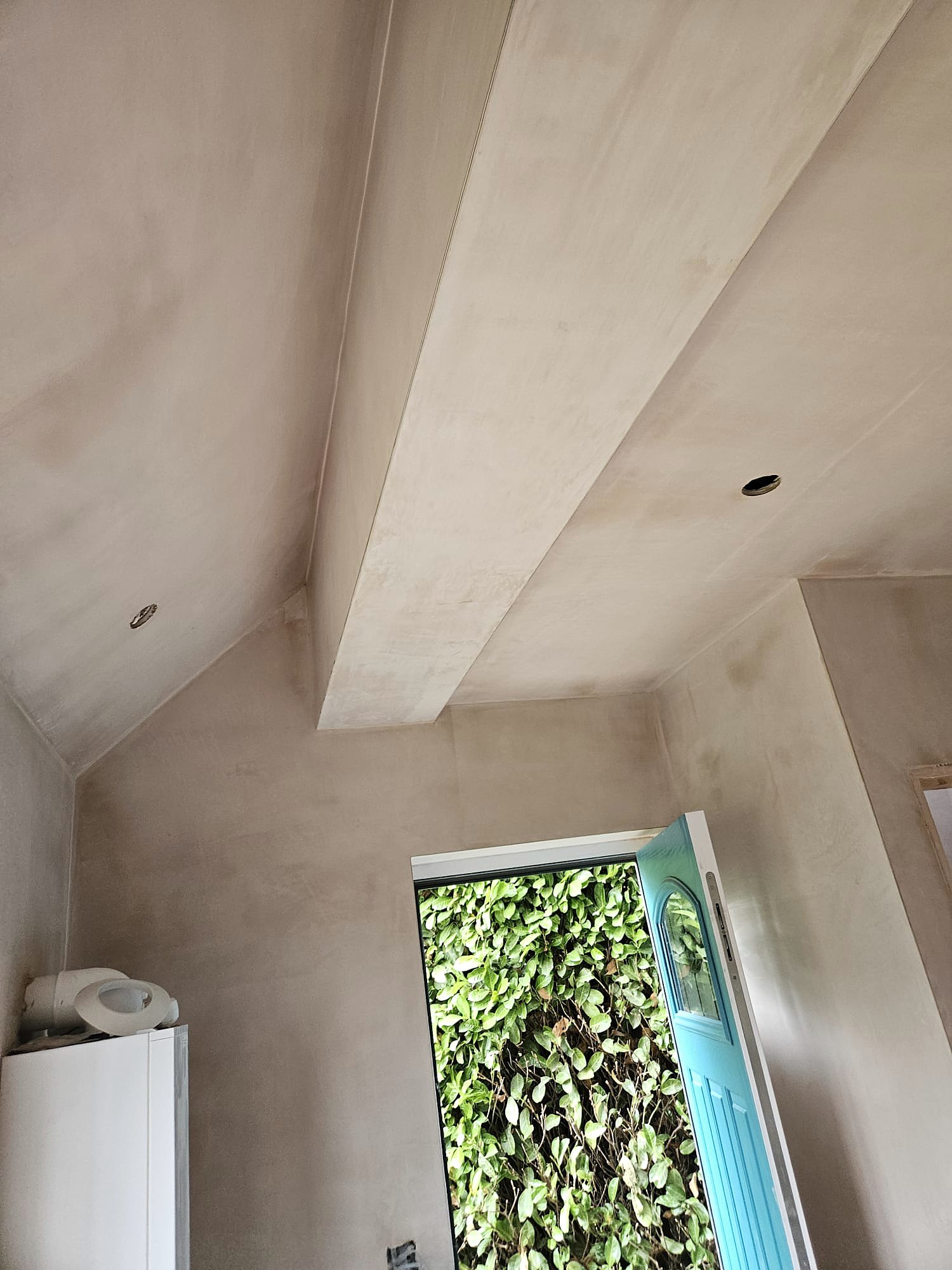
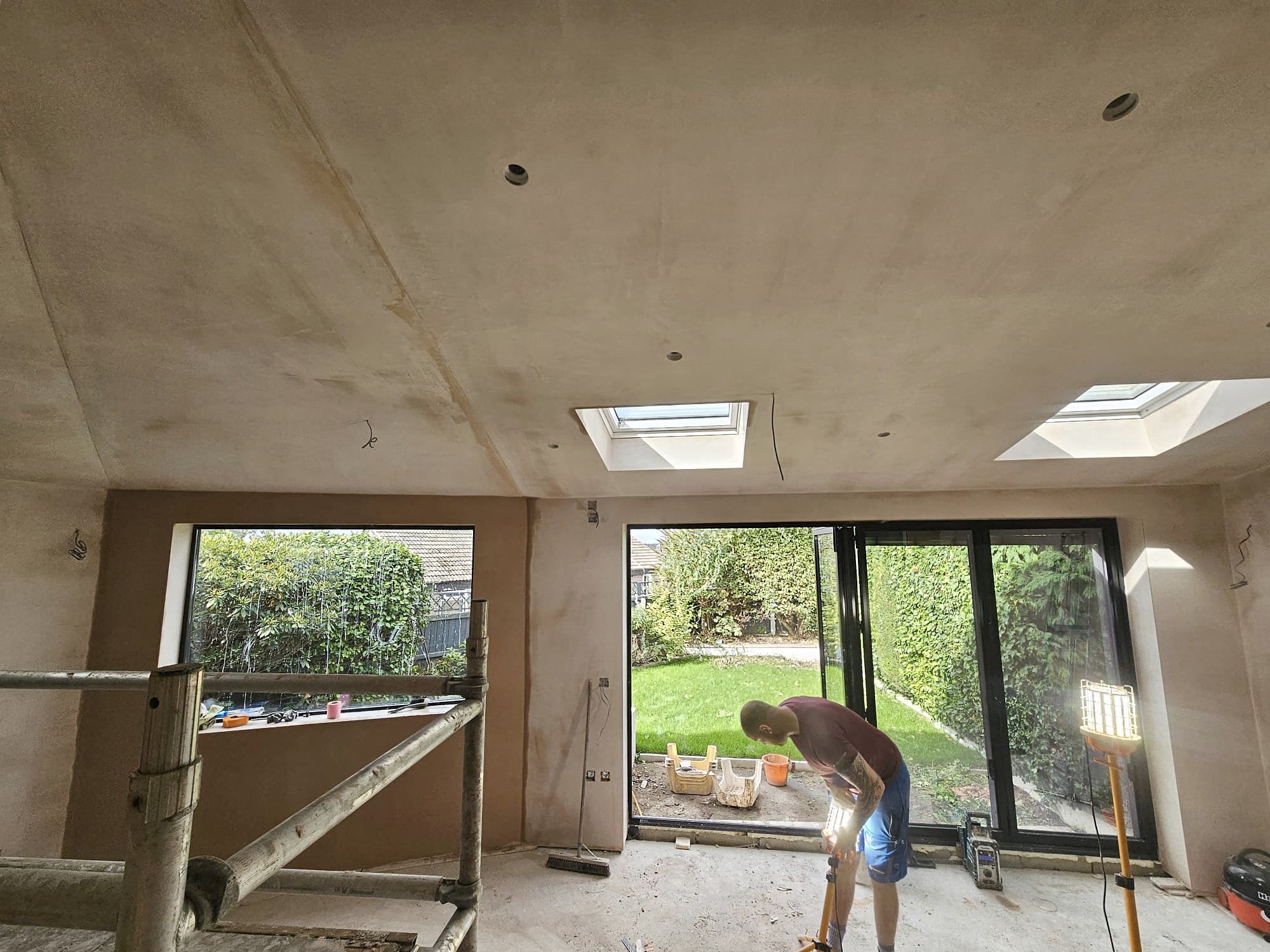
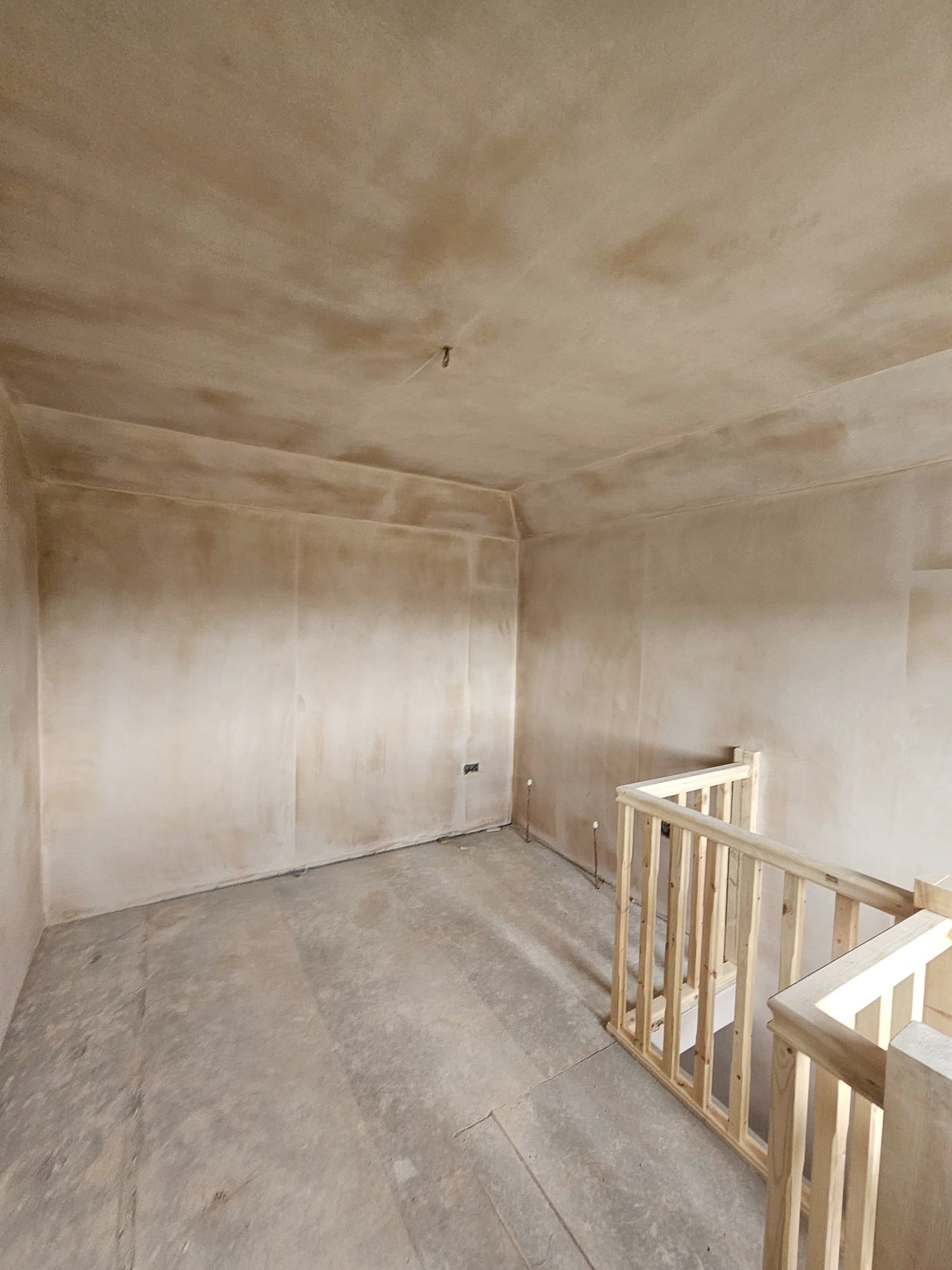
Recent work by Darren
How the job runs
- 1Check the frame, joists or walls and agree board types and layout
- 2Room protected and first-fix electrics and plumbing confirmed in place
- 3Boards fixed by dot and dab or screws and cut neatly round openings
- 4Angle beads on external corners and scrim tape over every joint
- 5Skim coat applied for a smooth, paint-ready finish
FAQs
+Is dot and dab better than screwing plasterboard?
Neither is better in every situation. Dot and dab is quick and suits solid masonry walls that are out of true. Screw-fixing is used on timber or metal studs, joists and rafters, and is the method for ceilings. Darren picks the method to suit the wall, the room and what you plan to hang on it.
+Can you plasterboard over an old ceiling?
Yes, over-boarding is common where an old ceiling is cracked or uneven but still secure. New boards are screwed through into the joists with screws long enough to get a proper fix, then taped and skimmed. If the old ceiling is sagging or coming away, it is safer to take it down first. Older artex should be tested for asbestos before it is disturbed.
+What plasterboard should I use in a bathroom?
Moisture-resistant board is the usual choice for bathroom walls and ceilings, as it copes with humidity better than standard board. Areas that will be tiled inside a shower often need a tile backer board or waterproofing system instead, which your bathroom fitter will normally specify. Darren will board and skim to whatever the room needs.
+Do you need to skim after plasterboarding?
For a smooth, paint-ready finish, yes in most cases. Skimming covers the whole board, hides joints and screw heads, and gives a harder surface. Taping and jointing is an alternative on some boards, but most homeowners want the finish of a skim coat, and Darren usually boards and skims as one job.
+How long after plasterboarding can you skim?
Screw-fixed boards can be skimmed as soon as the joints are taped and beads are on. With dot and dab, the adhesive needs time to set before skimming, usually at least overnight depending on the product and conditions. Darren plans the job so each stage is ready before the next one starts.