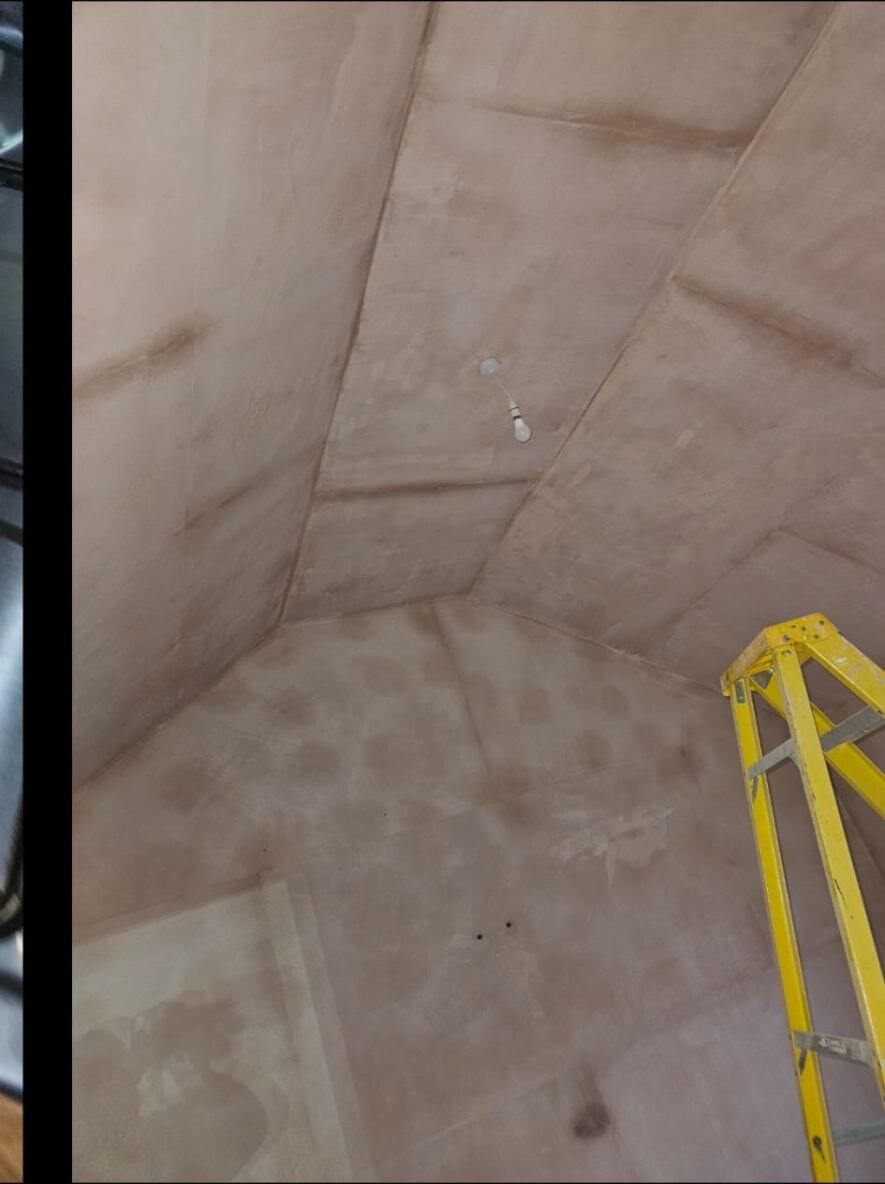
Damp Patch Repairs in Leeds & Yorkshire
Damp patches need the cause fixing first, then the plaster repairing properly. Darren will give you a straight answer and a tidy, lasting repair.
When you might need damp patch repairs
- ✓Blown plaster after a leak
- ✓Salt staining and crumbling skirting-line plaster
- ✓Repairs after damp-proof treatment
- ✓Patching before redecorating
The cause has to be fixed first
Damp plaster is a symptom, not the problem. The moisture is coming from somewhere: a leaking pipe, an overflowing gutter, a cracked downpipe, failed pointing, a bridged damp proof course or condensation in a poorly ventilated room. If new plaster goes over a wall that is still getting wet, it will stain, blow and fail again. That is why the first job is always finding and sorting the source.
Plastering over a damp problem only hides it for a while, so the cause always comes first. Darren will give you a straight view of what he can see and point you towards the right trade, whether that is a roofer, plumber, builder or damp specialist. Once the cause has been dealt with and the wall has had time to dry, he repairs the plaster properly.
Why damp plaster usually has to come off
When water moves through a wall it carries salts out of the brick and mortar, which build up in the plaster as it dries. That is the white, fluffy bloom and crumbling surface you often see along skirting lines. Salt-contaminated plaster keeps pulling moisture from the air, so even after the source is fixed the patch can stay damp and mark new paint. Skimming over it rarely lasts, so the affected plaster usually needs hacking off.
Darren takes the plaster back to the masonry, a little beyond the visible damage, and lets the wall dry where needed. He then applies a suitable backing coat followed by a skim. The right backing depends on the wall and on any recommendations from a damp specialist, as some treatments come with their own re-plastering specification. Darren will follow that specification so the repair works with the treatment rather than against it.
Preparing the room and what affects the price
Hacking off old plaster is dusty work, so floors, furniture and doorways are protected before anything starts, and skirting boards are taken off where needed so the repair can go down to the right level. Rubble is bagged up and the room left tidy. The size of the damaged area, how far the salts have spread, and whether sockets or radiators need moving by other trades all affect the price.
Small patches after a one-off leak are usually quicker and can sometimes be priced from photos. Larger areas along a whole wall, or damp affecting several rooms, need a proper look first. Quotes are free with no call-out fees, and Darren covers Leeds and the surrounding Yorkshire area. He will be upfront if he thinks the damp has not been fully resolved yet, rather than plastering over a problem.
Drying and decorating a damp repair
A backing coat and skim take longer to dry than a skim on its own, and thick solid walls that held water for a long time can take longer again. Keep the room warm and ventilated, and wait for the new plaster to turn an even pale colour before painting. Use a mist coat and a breathable emulsion rather than vinyl or impervious paints, which can trap moisture. If marks reappear later, the source needs checking again.
It also helps to keep the conditions that caused the problem in check. Keep gutters and downpipes clear, use extractor fans in kitchens and bathrooms, and avoid pushing furniture tight against cold external walls where condensation can form behind it. Keep an eye on the repaired area over the following months, as early signs of a returning problem are much easier and cheaper to deal with.
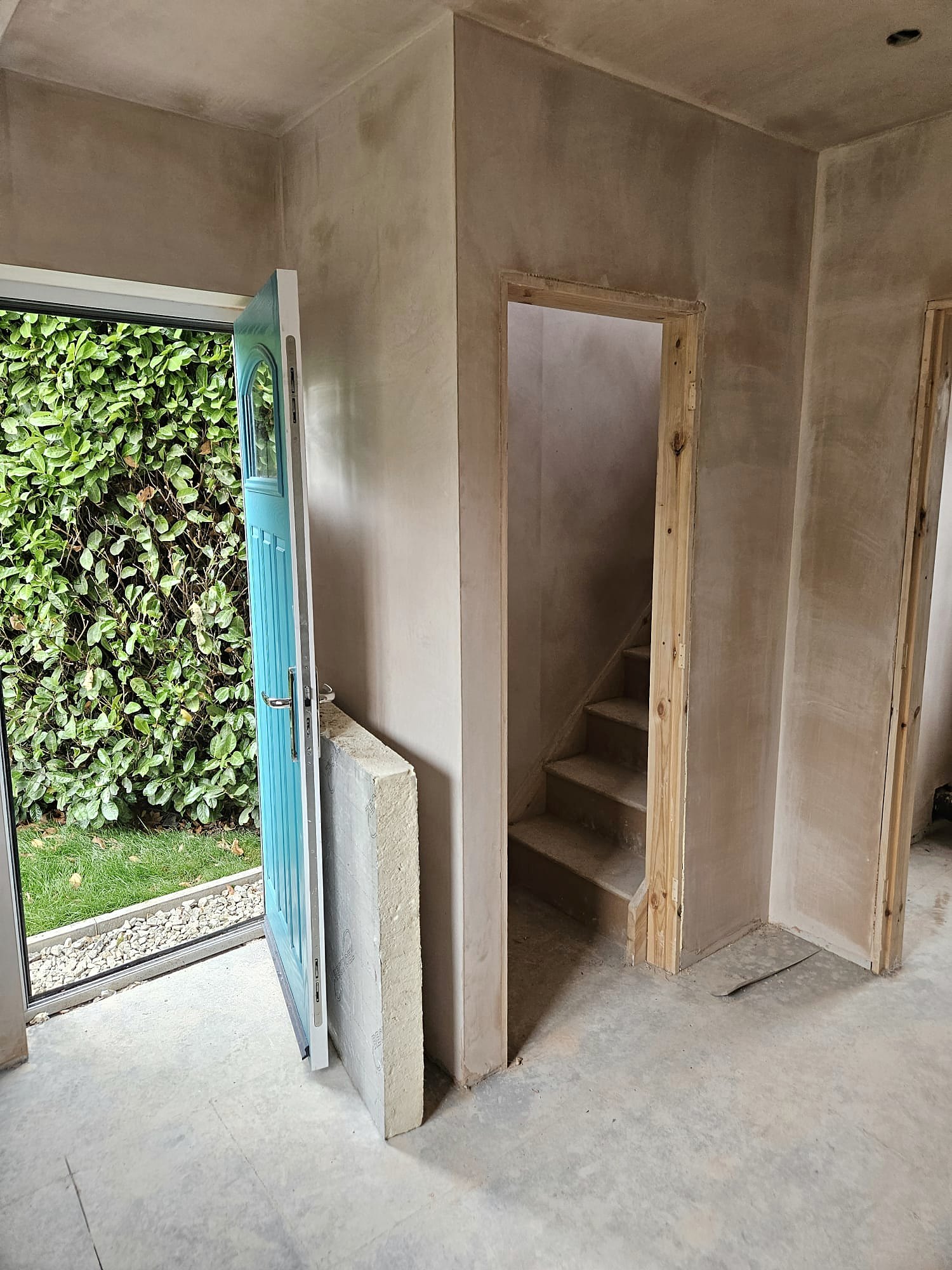
Recent work by Darren
How the job runs
- 1Look at the damp patch and talk through the likely cause
- 2Cause fixed by the right trade and the wall given time to dry
- 3Room protected, skirting removed where needed and damaged plaster hacked off
- 4Backing coat and skim applied to suit the wall and any specialist specification
- 5Site cleared, with advice on drying times and breathable paint
FAQs
+Can you plaster over a damp wall?
Not while it is still getting wet. New plaster over an active damp problem will stain, blow and fail. The cause needs fixing first, and plaster contaminated with salts usually needs removing. Once the wall has dried and been prepared, it can be re-plastered with a backing coat and skim that will last.
+Why does damp keep coming back after painting over it?
Usually because the source has not been fixed, or because salts left in the old plaster keep drawing moisture from the air. Stain-block paint may hide it for a while, but the patch tends to return. The lasting fix is to sort the cause, remove the contaminated plaster and re-plaster the area.
+How long should a wall dry out before re-plastering?
It depends on how wet the wall got, how thick it is and the time of year. A small area after a quick leak may dry out fairly soon, while a solid wall that has been damp for a long time can take much longer. Darren will check the wall before plastering rather than working to a fixed date.
+Do plasterers do damp proofing?
Damp-proofing and plastering are separate jobs. For rising or penetrating damp, the cause needs diagnosing and treating first, usually by a damp specialist, roofer or builder depending on what it is. Once that is done, Darren can re-plaster the affected walls to their specification.
+What do white salts on a damp wall mean?
White, fluffy or crystal-like deposits are salts carried out of the brickwork by moisture, and they show the wall has been wet for some time. The salts keep attracting moisture from the air, so the plaster they are in usually needs to come off and be replaced after the cause of the damp has been fixed.